Periodontal Treatment for Recurrent Gum Infections

Recurrent gum infections rarely start as a dramatic problem. More often, they begin with a little bleeding when brushing, a tender spot near one molar, or breath that does not seem to improve no matter how careful someone is with mouthwash. Then the pattern repeats. The gums calm down for a while, flare again, and gradually the episodes become harder to ignore. By the time many patients seek dedicated periodontal treatment, they are not reacting to a single bad week. They are responding to a cycle that has already started to affect comfort, confidence, and sometimes the stability of their teeth.
That repeat pattern matters. A one-off gum irritation can come from aggressive brushing, a trapped popcorn hull, or a temporary lapse in oral hygiene during travel or illness. Recurrent infection suggests something more established. The bacterial biofilm has likely moved below the gumline, the tissues are reacting over and over, and the mouth has created niches where plaque is not easy to remove at home. In practical terms, that means the problem is no longer just about brushing better. It calls for a more precise diagnosis and, very often, structured periodontal treatment.
What recurrent gum infections usually signal
Healthy gums fit snugly around the teeth. They do not bleed easily, they are not puffy, and they do not release pus or develop a foul taste around specific areas. When infections keep coming back, the most common explanation is periodontal disease, especially when there is also redness, bleeding, tenderness, gum recession, or loose teeth.
Periodontal disease progresses in stages. Gingivitis is the early and reversible form, where inflammation is limited to the gums. Periodontitis develops when the inflammatory process and bacterial burden extend deeper, affecting the ligament and bone that support the teeth. Once that deeper support is involved, the body may not return to full health with home care alone.
Many patients are surprised by how local these infections can be. Someone may have generally decent brushing habits and still develop recurrent inflammation around the back molars, crowded lower front teeth, or an old crown margin that traps plaque. I have also seen people assume the problem is an isolated abscess, when in fact the abscess is one expression of a broader periodontal issue that has been smoldering for years.
There are also cases where recurring infections are less about neglect and more about anatomy, health status, or past dental work. Deep gum pockets, furcation areas between roots of molars, dry mouth from medication, smoking, poorly controlled diabetes, and ill-fitting restorations all make control more difficult. This is why two patients with similar brushing habits can have very different outcomes.
Why the cycle keeps returning
Gum infections recur because the source of the infection is often still present after the visible symptoms settle down. A rinse may reduce the smell. An antibiotic may temporarily quiet the swelling. A few days of meticulous brushing may make the gums look less angry. But if bacterial deposits remain beneath the gumline, the tissue is likely to flare again.
This is one of the most important points for patients to understand. Periodontal treatment is not just about reducing redness. It is about disrupting and removing the bacterial deposits, calculus, and inflamed tissue conditions that let the infection continue. If the root surfaces remain contaminated or the gum pockets stay deep enough to harbor bacteria, recurrence is common.
A familiar example is the patient who gets a painful, swollen gum area every few months around the same tooth. They may take antibiotics from urgent care or wait for it to drain on its own. The pain goes away, so the problem feels solved. Yet the underlying pocket remains, and each flare tends to return a little faster than the last. At that stage, the infection is not random. It is predictable.
The first appointment is more investigative than many people expect
A proper periodontal assessment is detailed. It should be. Recurrent infections do not respond well to guesswork.
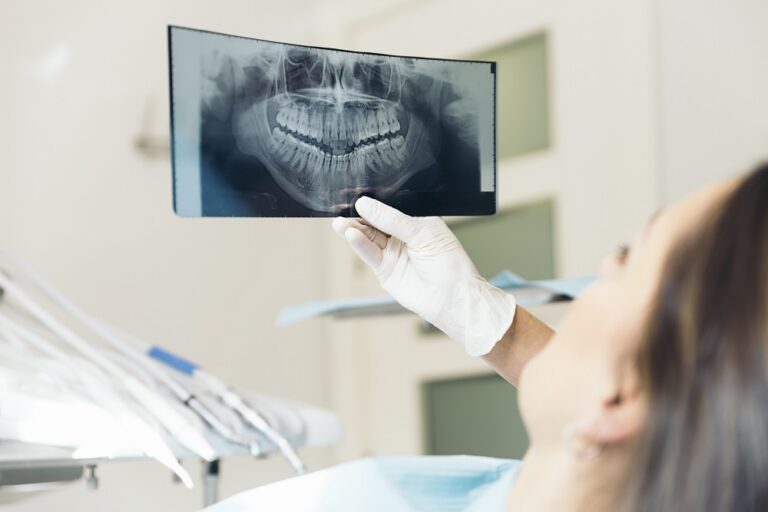
The examination usually includes probing around each tooth to measure pocket depths, checking for bleeding points, evaluating gum recession, testing tooth mobility, and reviewing radiographs to assess bone levels. Dentists and periodontists also look at plaque retention factors such as rough crown edges, overhanging fillings, root grooves, misaligned teeth, and areas where food packs repeatedly.
Patients sometimes expect the entire problem to be handled in one short cleaning visit. That is rarely realistic when infection has become recurrent. Regular prophylaxis and periodontal treatment are not the same thing. A routine cleaning is meant for generally healthy gums or mild gingivitis. Established periodontitis often needs deeper instrumentation and a more deliberate treatment sequence.
The medical history matters too. Uncontrolled blood sugar, immunosuppressive medication, smoking or vaping, clenching, and xerostomia all influence healing and recurrence. There are also edge cases where what looks like recurring periodontal infection may be tied to a cracked tooth, vertical root fracture, endodontic infection, or a combination of periodontal and pulpal disease. Those distinctions change the treatment plan significantly.
What periodontal treatment actually involves
For recurrent gum infections, the first active phase of periodontal treatment usually focuses on debridement below the gumline. That means scaling and root planing, sometimes called deep cleaning, though that simpler term does not fully capture the precision involved. The goal is to remove plaque, calculus, and bacterial toxins from the root surfaces so the gums have a chance to heal and reattach as much as possible.
When done thoroughly, this is not the same as a quick polish. Local anesthesia is often used because infected, inflamed pockets can be sensitive. Treatment may be completed over more than one visit, especially if multiple quadrants are involved. In moderate cases, patients notice less bleeding within days and improved comfort over a few weeks. In advanced cases, healing is slower and the improvement depends heavily on home care and risk factor control.
At this stage, adjunctive antimicrobials may be considered, but they should support mechanical treatment, not replace it. Local antibiotic placement in selected deep sites can be useful. Systemic antibiotics are reserved more carefully because recurrent use without debridement tends to offer short-lived relief and may contribute to resistance or incomplete resolution.
For some patients, that initial phase is enough to stabilize the condition. Pocket depths shrink, bleeding falls, and the cycle of repeated infections stops. For others, especially where pockets remain deep or access is poor, surgical care becomes the next rational step.
When non-surgical care is not enough
There is a threshold where even excellent non-surgical therapy cannot fully clean or maintain the area. Deep residual pockets, complex molar root anatomy, and defects in the supporting bone are the most common reasons. In those cases, periodontal treatment may move into surgery, not because the first phase failed, but because it revealed what can and cannot be controlled conservatively.
Periodontal surgery can take several forms. Sometimes the purpose is access. The gum tissue is gently reflected so the root surfaces and underlying defect can be cleaned under direct vision. In other cases, the aim is regenerative, trying to rebuild lost support in carefully selected defects using graft materials or membranes. Crown lengthening may be recommended where excess tissue or poorly positioned margins contribute to chronic inflammation. When recession is part of the problem, soft tissue grafting may help improve tissue thickness and reduce vulnerability in exposed areas.
Patients often worry that surgery means they have reached the worst possible stage. That is not necessarily true. Some of the most satisfying outcomes come from well-chosen surgical treatment https://cristiannbqq728.moderncairn.com/posts/how-long-does-periodontal-treatment-take-to-work in localized sites that have resisted repeated inflammation for years. The key is case selection. Not every pocket should be grafted, and not every recurrent site needs surgery. Good periodontal care is full of judgment calls like this.
The role of abscess management
A recurrent periodontal abscess deserves prompt attention because it can be acutely painful and may spread. Management usually begins with drainage, cleaning of the involved pocket, and identifying the source. If the tooth has a hopeless prognosis because of severe attachment loss, advanced mobility, or a root fracture, preserving it at all costs may not be sensible. Patients sometimes need help hearing that clearly. There is a point where repeated emergency visits become more burdensome than definitive treatment.
Where the tooth remains maintainable, treating the active infection and then transitioning quickly into comprehensive periodontal treatment is the best route. Waiting until symptoms disappear and then doing nothing invites another episode.
Home care can either support treatment or undo it
Professional care is essential, but it cannot compensate for ineffective plaque control at home. This is not a moral judgment. Many patients with recurrent gum infections are trying hard, yet missing the specific technique or tools that matter for their anatomy.
A person with tight contacts and moderate bone loss may need floss or interdental brushes used with more precision than they have ever been shown. Someone with bridgework may need threaders or a water irrigator. A patient with exposed root surfaces may require a softer brushing approach, not a more aggressive one. The details matter.
The most useful home care instructions are specific and realistic:
- Brush twice daily with a soft-bristled brush, angling into the gumline rather than scrubbing across it.
- Clean between teeth every day with the tool that actually fits the space, floss, interdental brushes, or both.
- Use any prescribed antimicrobial rinse exactly as directed, usually for a limited phase rather than indefinitely.
- Stop smoking or vaping if possible, because both significantly impair gum healing and raise recurrence risk.
- Return for reevaluation and maintenance even if symptoms improve quickly.
What works in the operatory does not always transfer perfectly into daily life, so adjustments are common. I have seen patients improve dramatically not after buying expensive products, but after switching from standard floss they could not manipulate well to interdental brushes they actually used consistently.
Maintenance is where long-term success is won
One of the biggest misunderstandings around periodontal treatment is the belief that once deep cleaning or surgery is completed, the disease is finished. Periodontal disease behaves more like a chronic condition that can be controlled than a one-time event that is permanently erased.
That is why periodontal maintenance is different from a routine six-month cleaning. Patients with a history of recurrent infection often need recalls every three to four months, at least initially. During these visits, clinicians reassess pocketing, bleeding, plaque control, and any sites that tend to relapse. Deposits are removed before they trigger another inflammatory cycle.
The interval matters because bacterial communities repopulate over time, and susceptible patients can deteriorate quietly between appointments. It is not unusual for someone who seemed stable at six weeks after treatment to show renewed bleeding and deepening pockets at six months if maintenance is delayed.
This is also where the treatment team learns what the mouth actually does over time. Some sites remain beautifully stable. Others repeatedly collect plaque despite everyone's best effort. That information guides decisions about retreatment, surgery, restoration changes, or extraction.
The systemic side of recurrent gum infections
Gum disease is local, but it does not exist in isolation from the rest of the body. Diabetes is one of the clearest examples. Poor glycemic control worsens periodontal inflammation, and periodontal inflammation can make blood sugar control more difficult. The relationship runs both ways. When recurrent infections are part of the story, it is worth asking whether systemic health is helping or hindering treatment.
Pregnancy, menopause, autoimmune conditions, nutritional deficits, and medications that reduce saliva can also shape how gums respond. Even chronic mouth breathing can dry tissues enough to make inflammation more persistent in certain regions. None of these factors excuse poor plaque control, but they do change the treatment picture and should affect expectations.
There is also the issue of smoking, which deserves direct mention. Smokers may bleed less visibly while still carrying significant disease activity, and they generally heal less predictably after periodontal treatment. Patients sometimes take the reduced bleeding as a good sign when it is not. Nicotine constricts blood vessels, masking one of the body's warning signals. This is one reason tobacco history has to be interpreted carefully.
When extraction becomes part of sound periodontal care
Saving teeth is a worthy goal, but not every tooth should be saved. In recurrent gum infections, especially around severely compromised molars, the better clinical decision may be removal followed by a thoughtful replacement plan or, in some cases, no replacement at all if the bite allows it.
That conversation can be emotionally loaded. People often hear extraction as failure. Yet keeping a tooth with repeated abscesses, advanced mobility, and almost no remaining support may expose the patient to repeated pain, emergency visits, and avoidable expense. Good periodontal judgment includes knowing when a tooth is maintainable, when it is questionable, and when it is no longer predictable enough to justify the effort.
The most respected clinicians I know are not the ones who save every tooth at any cost. They are the ones who match treatment intensity to prognosis and explain the trade-offs honestly.
What patients should expect after treatment
Most non-surgical periodontal treatment causes some temporary tenderness, especially around inflamed areas. Mild sensitivity to cold is also common for a period after scaling and root planing because inflamed tissue shrinks back and root surfaces become more exposed. That can feel discouraging if a patient was expecting everything to feel perfect immediately. Usually it settles with time, desensitizing toothpaste, and good plaque control.
Improvement is often gradual rather than dramatic. Bleeding tends to reduce first. Then the gums look firmer, less swollen, and less shiny. Breath may improve. The aching, heavy sensation many patients describe around chronically infected areas often fades as well. Pocket reduction and tissue stabilization are typically measured over weeks to months, not days.
After surgery, the timeline depends on the procedure. Access flap surgery and regenerative procedures involve a more structured healing period. The instructions matter. So does patience. The success of the treatment is not judged by the first few postoperative days, but by the stability of the site after proper healing and maintenance.
A practical way to think about prognosis
If a patient asks whether recurrent gum infections can truly be controlled, the honest answer is yes, often very successfully, but not casually. The best outcomes usually share a few features: early diagnosis, thorough debridement, realistic home care, regular maintenance, and risk factors that are either low or actively managed.
Here is a useful framework clinicians often consider when discussing prognosis:
| Factor | Better outlook | More guarded outlook | |---|---|---| | Pocket depth | Shallow to moderate residual pockets | Deep persistent pockets | | Smoking status | Non-smoker or quits | Continues smoking or vaping heavily | | Diabetes | Well controlled | Poorly controlled | | Tooth anatomy | Easy-to-clean single roots | Furcations, deep grooves, crowded areas | | Patient follow-up | Regular maintenance attendance | Irregular or emergency-only visits |
This is not a rigid formula, but it reflects the reality seen in practice. The mouth usually tells the truth over time. Patients who engage with maintenance and adapt their routines tend to keep more teeth and have fewer acute flare-ups.
The real goal of periodontal treatment
For recurrent gum infections, the goal is not just to stop the current swelling. It is to create a mouth that is comfortable, cleanable, and stable enough that flare-ups stop dominating everyday life. That may involve deep cleaning alone, surgical therapy, restorative adjustments, extraction of a hopeless tooth, or a mix of all of these. Good care is individualized because recurrent disease is rarely identical from one patient to the next.
When patients understand that periodontal treatment is both active treatment and ongoing management, the process makes more sense. The gums improve because the bacterial burden is reduced, the anatomy is made more maintainable where possible, and the patient is given a realistic maintenance plan rather than a quick fix. That is how the cycle is broken.
For anyone dealing with gum infections that keep returning, the most important step is not another temporary rinse or another round of hoping it settles on its own. It is a thorough periodontal evaluation and a treatment plan built around the actual cause. Recurrent infections almost always have a story behind them. Once that story is understood, treatment becomes far more effective and far less frustrating.
Avra Dental
Address: 1708 S Victoria Ave B, Ventura, CA 93003
Phone number: (805) 941-1001
FAQ About Periodontal Treatment
Can a dentist get rid of periodontal disease?
A dentist or gum specialist (periodontist) cannot fully cure or reverse advanced periodontal disease (periodontitis), but they can successfully stop its progression and manage the infection.
Is periodontitis very serious?
Yes, periodontitis is a very serious, advanced form of gum disease that destroys the bone and tissues supporting your teeth.
How is stage 2 periodontal disease treated?
Stage 2 periodontal disease (early to moderate periodontitis) is primarily treated with non-surgical deep cleaning procedures like scaling and root planing to remove bacteria and tartar below the gumline.